Get in touch: [email protected]
Don’t Keep Research on the Shelves
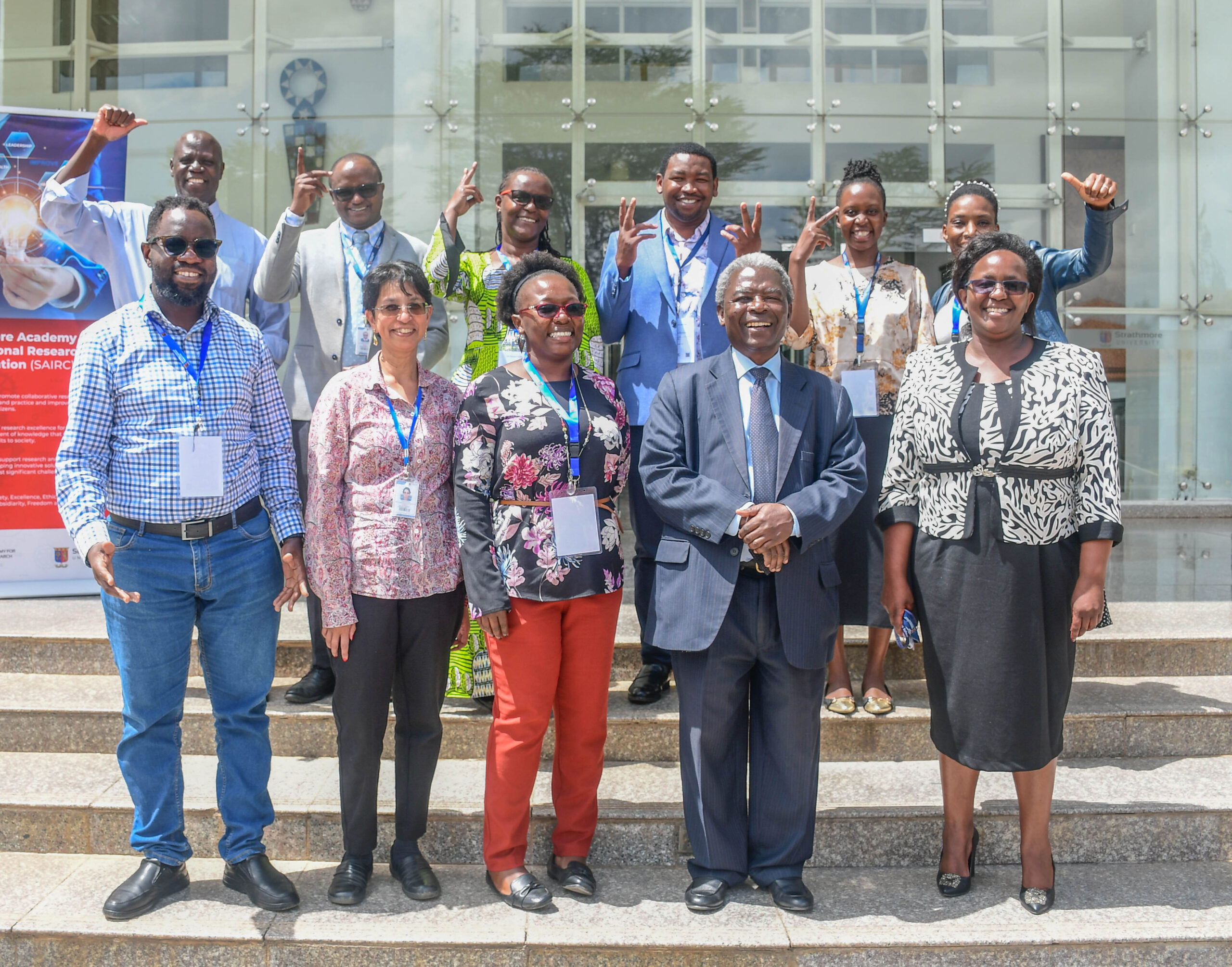
At the inaugural meeting of the Community of Research Excellence (CRE), a gathering focused on strengthening agriculture and food systems across Africa, the message was unmistakably clear: research must leave the shelves and shape the world it seeks to serve.
In his opening remarks, Prof. John Odhiambo, Chair of the Strathmore Academy for International Research Collaboration (SAIRC), emphasized that the Academy exists for one central purpose: to advance collaborative, high-quality research that drives impact. “Our work is grounded in a community of research excellence,” he noted. “Through SAIRC, we bring together researchers across borders to pursue rigorous inquiry, research that informs and transforms.”
What SAIRC Stands For
SAIRC was established to promote international and transboundary research collaboration. It is not a business enterprise; it is an academic institution anchored on excellence, integrity, and the pursuit of knowledge that can shift paradigms. By convening scholars from diverse fields and geographies, SAIRC seeks to tackle complex challenges, particularly those affecting Africa’s agricultural and food ecosystems, through evidence-based insights.
Prof. Odhiambo stressed that research only gains its true value when it is applied. SAIRC is committed to piloting sustainable, community-centered solutions that address real needs and create lasting change. “What we do informs many areas: pedagogy, education, policy, and beyond. The impact of research must be felt on the ground.” Through its network, SAIRC aims to ensure that research outcomes translate into practical interventions, improved livelihoods, and meaningful contributions to national and regional development agenda.
A Call to African Researchers
Before delving deeper into the technical discussions of the day, Prof. Odhiambo issued a rallying call to those in the room, and to African scholars more broadly. Africa, he noted, has the intellectual capital, the lived experience, and the contextual understanding needed to craft solutions that work for Africans.
“As African researchers and scholars, the mandate is on us,” he emphasized. “We have the manpower, the expertise, and the insight to define what progress should look like. We can solve our challenges together, through collaborative research.” He celebrated the strides already made by African researchers whose contributions are shaping policy, driving innovation, and directly addressing the continent’s development priorities.
And that is why forums like this matter, spaces where like-minded thinkers come together to demonstrate the power of collaboration, exchange ideas, understand the challenges our communities face, and work toward meaningful solutions. This is the very purpose of SAIRC. “We owe it to our people, we owe it to Africa. Our success will not be judged by publications alone, but by the real, lasting impact our work creates in society.”